
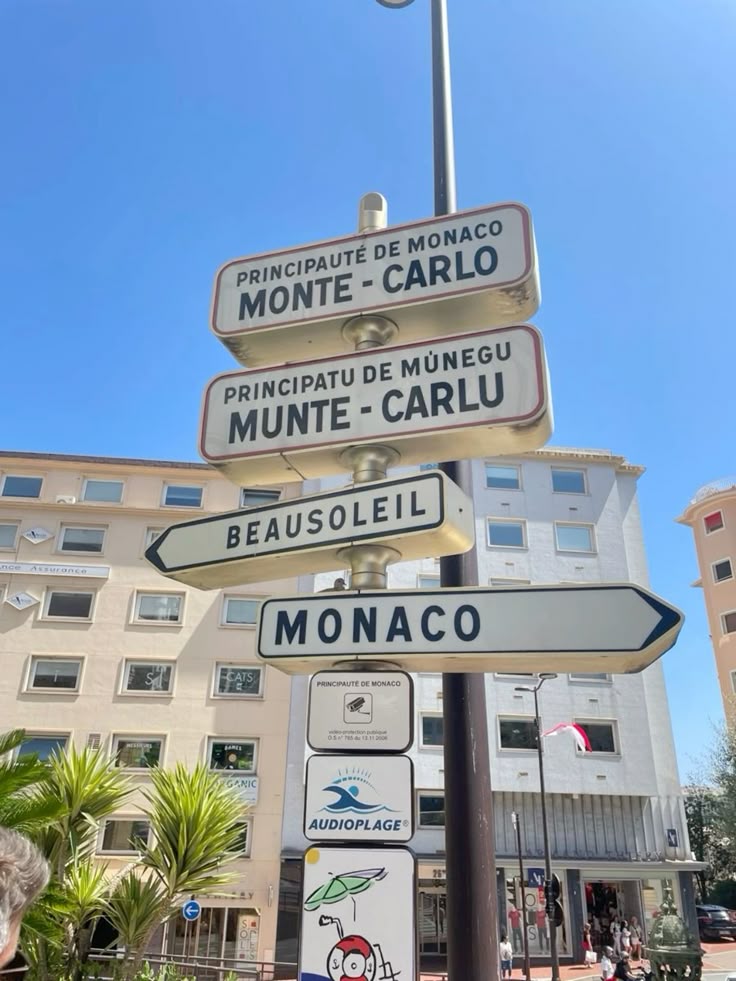
In recent years, the Monaco Grand Prix has become more of a farce than the pinnacle race of Formula One that it’s renowned for. Harsh, I know.
Taking place this weekend, the Saturday qualifying session has increasingly become more relevant than the Sunday race itself. And there’s one rather simple reason for that. It’s all down to the growing size of the cars. It turns out that as the F1 cars have grown in width and length over the years, the narrow streets of Monaco have, well, not changed. A few minor alterations have happened over the years, but the track has remained virtually unaltered since 1929, when the first Monaco Grand Prix took place. The race cars, however, have been growing in size year on year. 2026 is the first time in recent years that size has actually decreased, thanks to the new sporting regulations.
Now, it’s worth noting that Monaco has always been a fairly tricky circuit for overtakes, and that’s part of the alluring challenge about it. It’s a small track with unforgiving, immovable building walls, so there’s little room for error. The excitement around this track, despite the current issue – which I’ll come onto momentarily – can be neatly split into two key reasons:
- It’s a race steeped in history and prestige – we all know about the infamous tunnel, Casino square, and tricky swimming pool chicane. It’s even become expected for the race winner to dive into a pool/sea in celebration, and we love it.
- It oozes that aspirational Riviera glamour. The principality is awash with designer fashion, yachts, and super cars, all of which have one thing in common – money. Monte Carlo attracts the richest of the rich, and everyone wants a slice of that.
However, and I hate to be a cynic because I love Monaco, it’s glaringly obvious that the track doesn’t necessarily fit with modern-day racing. I know, I know, I hate it too. This issue has become especially apparent in the last three to four years.
Take last year’s disastrous attempt to ‘shake things up’ with mandatory pit stops that did little to improve the racing and only proved how the track and the current cars don’t align. Personally, I liked Max Verstappen’s suggestion that they race the LEGO cars around the circuit every year – that would be amazing. But in all seriousness, what else can they do? The cars are shorter in width and length this year, but that already seems like it won’t cut it. And that’s just one issue with these modern cars, let alone under the new regulations, which have enough issues.
For example, earlier this week, the FIA issued a pretty alarming ruling ahead of the 2026 Monaco Grand Prix, regarding a particular aspect of the new regulations.
In an official statement, the FIA confirmed that Active Aero (where both the front/back wings open for drag reduction, but not DRS) would not be used during this weekend’s race due to safety concerns. Essentially, the tyres are always right at the limit when driving around the Monaco circuit, which means that no Straight Mode Zones have been added to the track this year. The track’s narrow streets and tight corners mean that tyre traction and braking are needed more frequently than usual, and deploying Active Aero could negatively impact the car’s stability around corners. Resulting in an accident.
It’s a smart move from the FIA, particularly as the teams are still getting used to the new technology. It would be a horror show if a driver crashed from using it, especially for the Active Aero reputation, which is still up in the air. And the sport and new regulations don’t need the subsequent PR disaster and endless inquiries, so it’s safer, on this occasion, to remove the need entirely. But that also means the chances of overtakes are even smaller, not that there were many chances anyway. So, at the moment, qualifying is still technically more important than the race.
Of course, perfect pit stops still play a role, too. But if racing has become practically obsolete, then why does Formula One still go to Monaco? What hold does the small area have over the F1 calendar?
At its heart, Formula One is a sport of tradition. The tiny principality of Monaco has such a tight grip on the sport that letting it fall off the F1 calendar would be inconceivable, for most, if not all, fans. In part, it’s because of what the sport culturally embodies. To win at Monaco is to be crowned the King of Formula One. It almost has its own championship title, just without the formality. If you removed the track from the Formula One calendar, then the only yachts we’d see would be in Abu Dhabi or those fake ones in Miami. And neither of those has the prestige, royalty status, or elite people-watching that Monaco does.
But that’s not the entire story. Yes, Monaco represents a level of wealth that most people can only imagine. Though what Monaco culturally represents, and why it firmly remains on the calendar, is for a different reason. Monaco isn’t just a race track. It’s a living Formula One museum. There is a story at every corner, past every landmark, and down every narrow street that sings when the Formula One circus comes to town once a year.
Culturally, the 0.8 square miles transforms for the race weekend. Everyone across the principality gets involved – hello apartment balcony parties – and many of the drivers and team members now reside there permanently. So, it would also be like removing their second-home race. And that’s just cruel.
We get to relive all those exceptional racing moments throughout history and walk the very streets that the greats like Schumacher, Prost, Senna, and Hamilton have battled, fought, and crashed. It’s arguably one of the only circuits that, culturally, brings fans of all demographics together, not to celebrate the glamorous lifestyle but to relive the narrative of what has been before. There’s a reason why we study history at school; humans are inherently fascinated by the past. And Monaco’s racing history is richer in wealth than all the billionaires in the area combined.
So, in reality, you can’t cut the Monaco Grand Prix from the F1 calendar. It is the beating heart of the sport, born 97 years ago. At the end of the day, Formula One is about the racing. And yes, we see less exciting racing in Monaco than we do at any other track in the year. But is that all the sport has become reduced to? Is it only exciting if there are lots of overtakes, or if there’s a crash, or other on-track drama? What happened to just watching a good race, where you still have to push it to the limit and fight for what is yours? Where you can’t take your foot off the pedal.
Monaco offers a respite from the chaos of other tracks and the stability of simply watching these beautiful machines work. We get to see the pure class and aristocracy of a track steeped in history and one of the birthplaces of this sport. And culturally, it brings fans of all demographics together for this little thing called tradition. This circuit is akin to royalty, and good luck finding another so prestigious to dethrone this rightful King.